Why Is My Toddler Acting Out? The Missing Piece Most Parenting Advice Overlooks
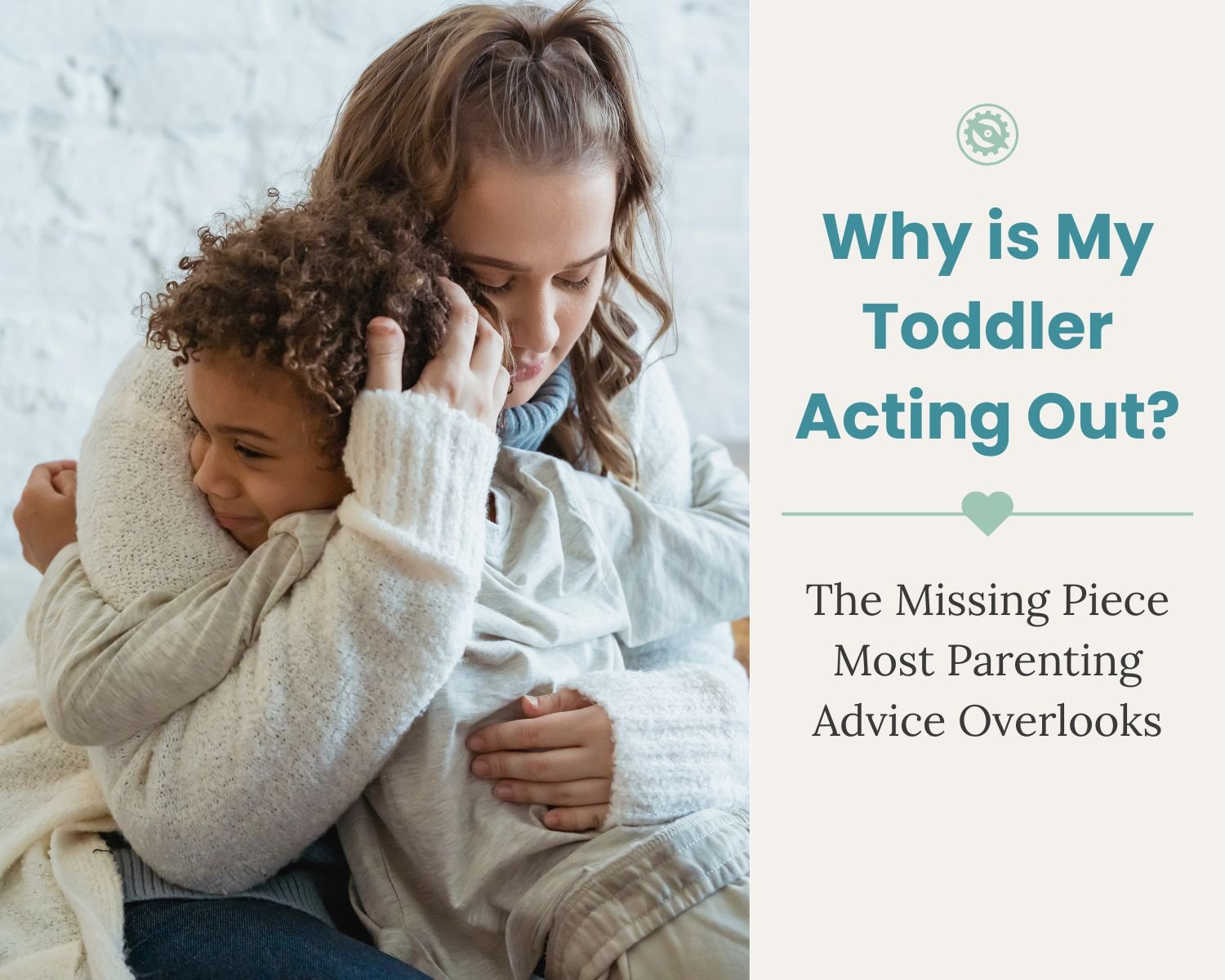
You ask your child to put on their shoes and they scream. You turn off the TV and they have a meltdown. You tell them it's time to leave the park and suddenly you're carrying a kicking toddler to the car.
If you're feeling like you've tried everything and nothing seems to work, you're not imagining it. That doesn't mean you're a bad parent or that parenting tips never work. I’ve found that most of the time, it's because you're missing the most important piece of the puzzle: why your child is acting out in the first place.
Many parenting strategies focus on what to do. Offer a choice. Use a timer. Stay calm. Set a boundary. While those strategies can be helpful, they don't work in every situation because they don't address what's driving the behavior.
Before you can know which strategy will help, you need to understand what's causing the behavior in the first place.
Imagine going to the doctor because you have a cough. The doctor immediately tells you to take cough syrup and get some rest. That might help if you have a common cold. But what if the cough is caused by asthma? Or pneumonia? Or allergies?
The symptom is the same. The cause is different. And different causes require different solutions. The same is true for your child's behavior.
A tantrum, power struggle, or refusal to listen isn't random. It's communication. When you understand the why behind the behavior, it becomes much easier to respond in a way that actually helps.
The Four Reasons Toddlers Act Out
Psychologist Rudolf Dreikurs identified four common reasons children misbehave. Over the years, I've found these same four patterns showing up again and again in everyday toddler struggles, both as a mom and as a teacher.
Most challenging behavior can be traced back to one of four root causes:
Needs Connection
Needs Power
Feeling Hurt
Lacking a Skill
The key is learning how to recognize which one is showing up in the moment.
1. Needs Connection
When a toddler acts out for attention, it’s because they’ve started to believe they only matter when you're focused on them. They may not know how to ask for your presence directly, so they create situations that demand it, usually in the most inconvenient ways.
You might notice:
Interrupting or being silly to get attention
Hitting a sibling to pull your focus
Acting helpless so you’ll engage
What many parents miss is that the behavior itself isn't the problem. The behavior may simply be your child's way of saying:
"Notice me."
2. Needs Power
Toddlers are wired to seek independence. The challenge is that their growing desire for independence doesn't always line up with what needs to happen in real life. That's when power struggles begin.
You might notice:
Power struggles around basic routines
Wanting to do it their way
Refusing or pushing back on instructions
What many parents see as defiance is often a child trying to answer the question:
"Do I get a say in my own life?"
3. Feeling Hurt
Sometimes behavior is driven by hurt feelings that a child doesn't know how to express. They may feel embarrassed, rejected, jealous, or misunderstood. Toddlers often lack the language and emotional skills to communicate these feelings directly.
You might notice:
Hurting others on purpose (physically or emotionally)
Saying things like “I hate you” or “you’re mean”
Doing the opposite of what you ask with a smirk or eye contact
When we focus only on the behavior, we miss the message underneath it. Often the behavior is communicating:
"I'm hurting."
4. Lacking a Skill
Sometimes what looks like defiance is actually a skill your child hasn't learned yet. Your child may not know how to manage frustration, wait their turn, join a game, handle disappointment, or communicate what they need.
You might notice:
Avoiding a task
Getting frustrated or melting down when something feels hard
Waiting for you to step in and do it for them
In these moments, the issue isn't motivation. The issue is that they’re lacking a specific skill. The behavior is communicating:
"I don't know how to do this yet."
Here's What Makes This Tricky
The same child can act out for different reasons throughout the day.
Your child may need connection before preschool, need power during brushing their teeth, feel hurt after a conflict with a sibling, and lack a skill during a playdate.
That's why there is no one size fits all parenting strategy.
The same behavior can have different root causes. And different root causes require different responses.
The Goal Isn't to Become a Perfect Parent
The goal is to become curious.
The next time your child acts out, pause before reacting and ask yourself:
Do they need connection?
Do they need power?
Are they feeling hurt?
Are they lacking a skill?
When you start looking for the why behind the behavior, everything begins to change.
Not Sure Which Root Cause Is Driving Your Child's Behavior?
Take my free 2 minute quiz to uncover what's most likely driving your child's behavior and learn what to focus on next.
Want Help Knowing What to Do Next?
Understanding the root cause is the first step.
The Behavior Compass helps you take the next one.
Inside, you'll learn how to identify the root cause behind common toddler challenges like bedtime battles, hitting, mealtime struggles, listening, screen time, cleaning up, and transitions.
Using a simple flowchart and color coded strategies, you'll know exactly where to start so you can stop guessing and start responding with confidence.
Frequently Asked Questions
Is it normal for toddlers to act out?
Yes. Challenging behavior is a normal part of child development. Toddlers are still learning how to communicate, regulate emotions, solve problems, and navigate relationships.
Why does my toddler act differently with me than other people?
Children are often most comfortable expressing big feelings with the people they trust most. While that can be exhausting, it doesn't mean you're doing anything wrong. They feel safe around you.
Why is my toddler suddenly not listening?
There are many possible reasons, including a need for connection, a desire for more independence, big emotions, or a skill your child is still developing. The key is identifying what's driving the behavior before deciding how to respond.
Why does my toddler have so many tantrums?
Tantrums are often a sign that a child is overwhelmed by emotions, unmet needs, or skills they haven't mastered yet. Looking at the root cause can help you better understand what your child needs in the moment.